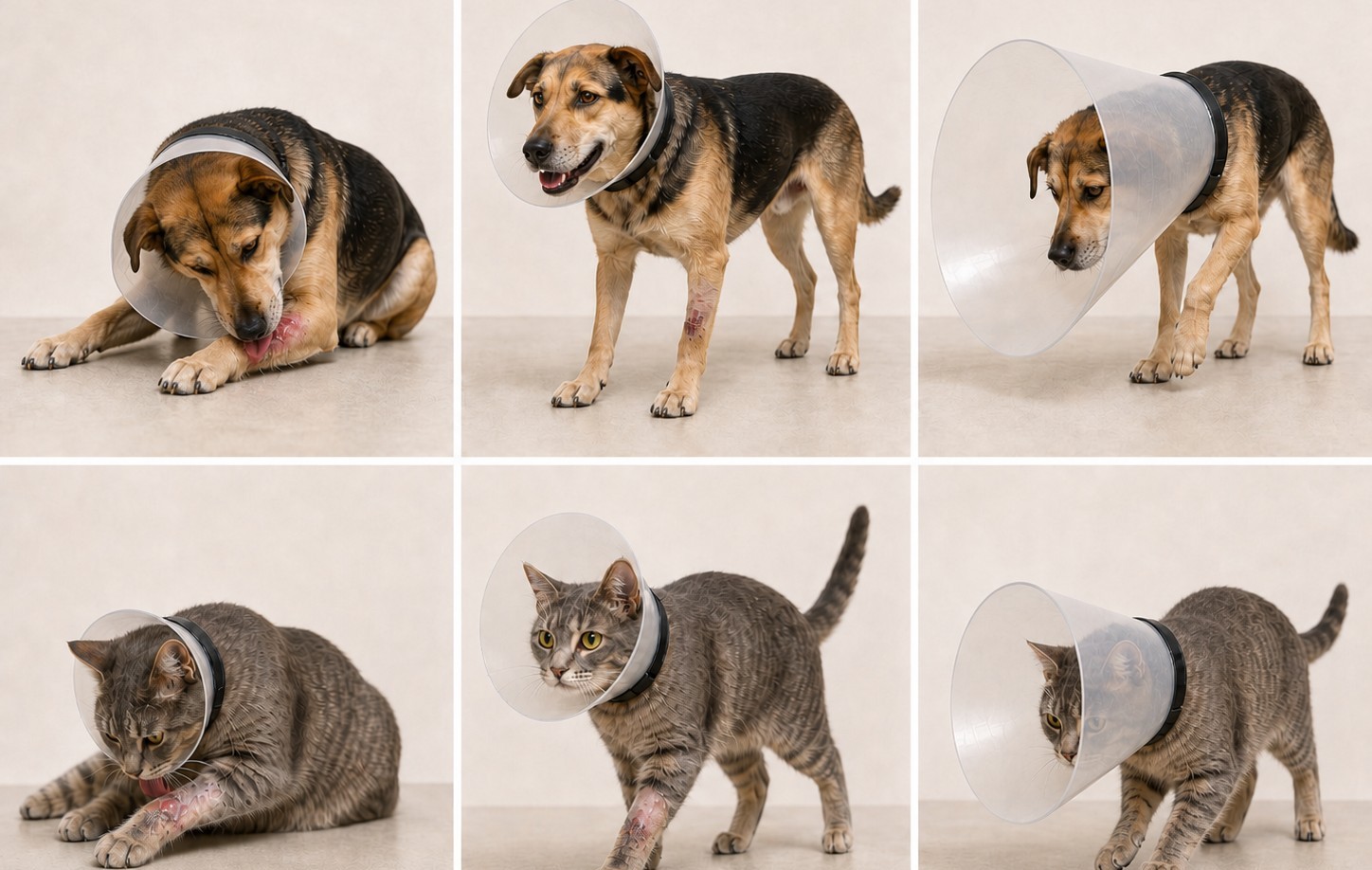
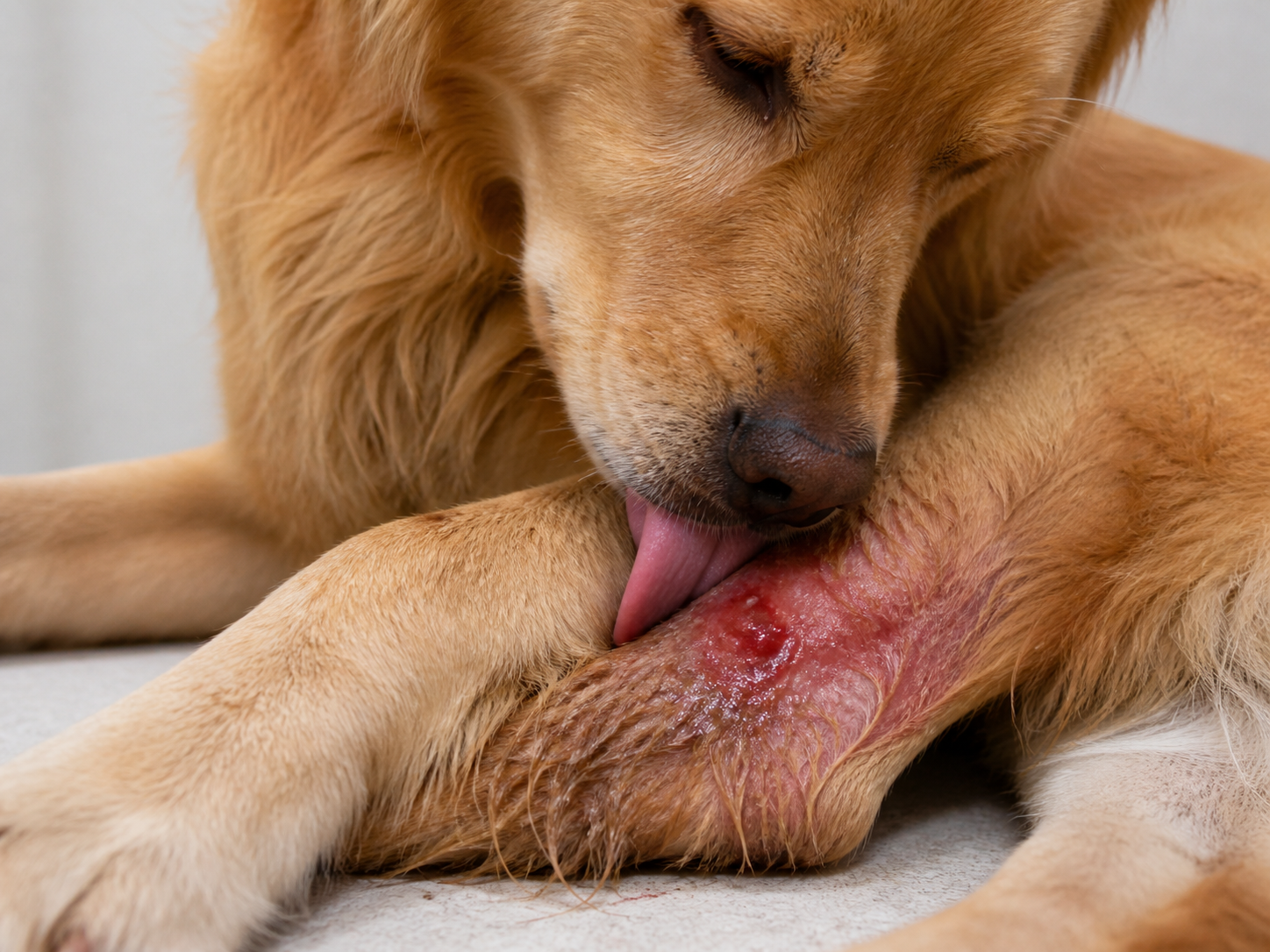
Wearing a cone is often a torture for pets, but it is absolutely essential for recovery. Although it's every pet owner's nightmare, let me explain why the cone is actually our best friend, making it hopefully less of a red flag.
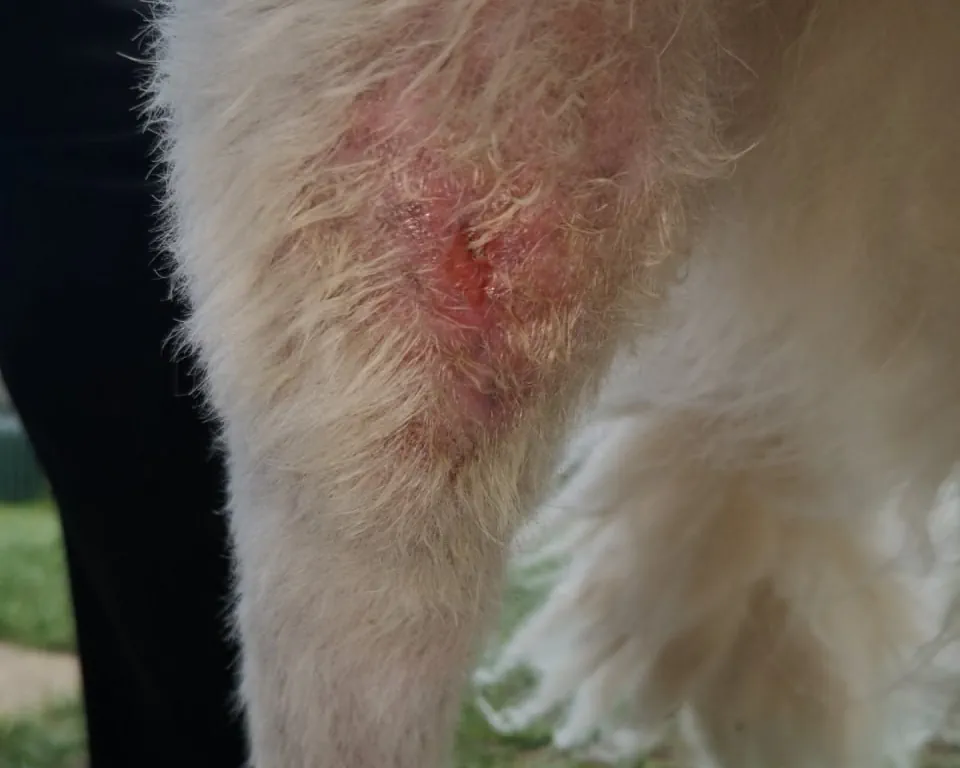
The first and most important thing for any wound—whether it's an incision (surgical), abrasion (rough play), burn, or damaged tissue—is: Keeping it clean!
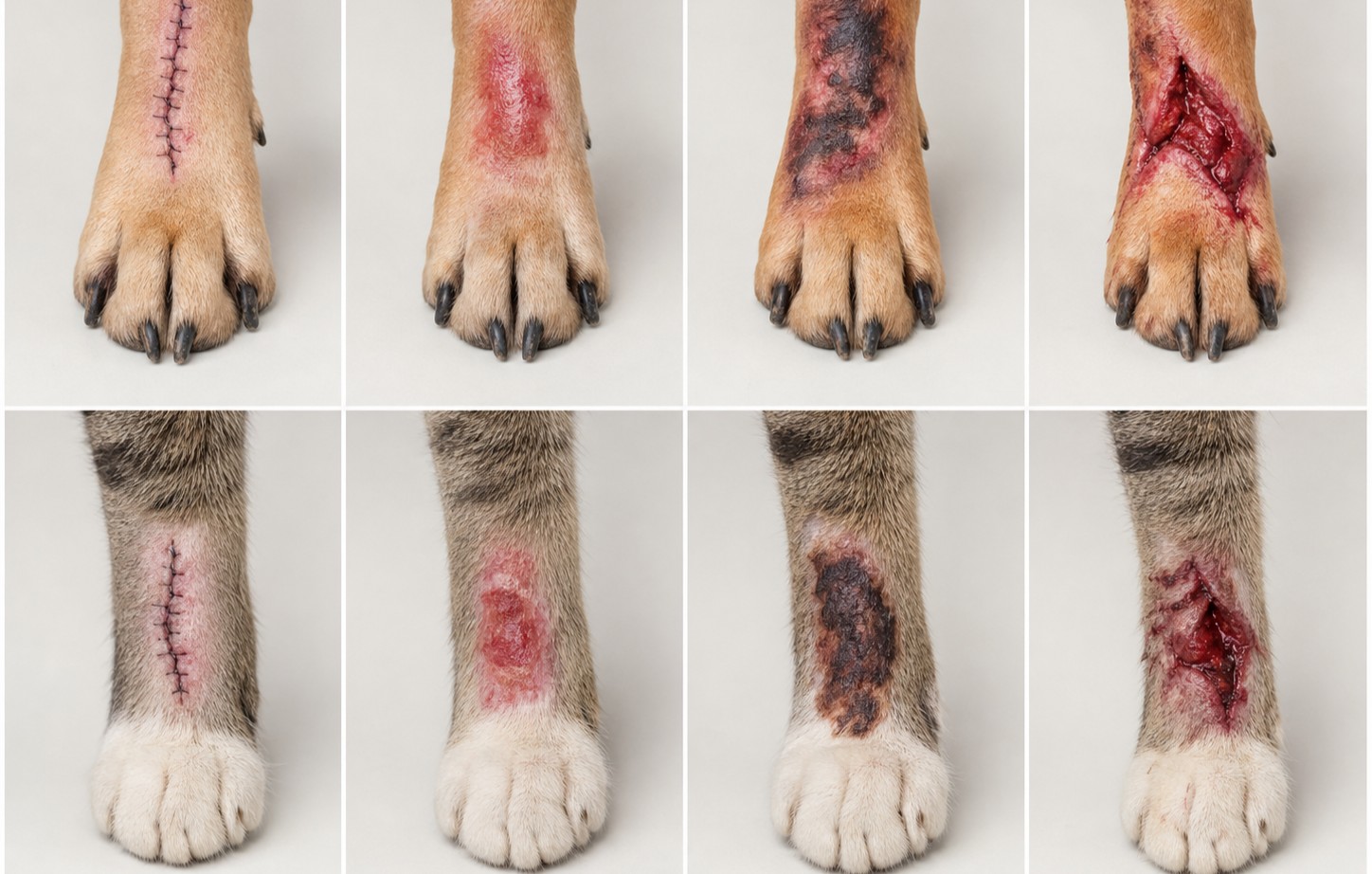
Simple. The skin is every living creature's protective wall. Every wound is a gateway through that protective wall straight into the body. Tiny microorganisms—like bacteria and viruses—can lead to infections extremely quickly.
An infection can be local (indicated by redness around the wound) or generalized (internal infection, usually accompanied by fever).
Important daily advice:
- Always wash your hands before treatment!
- Thoroughly clean the wound and its surroundings.
- Only use products prescribed by your veterinarian.
- Monitor the color and smell of the wound.
- Use a PROPER sized cone until the wound heals.
Wound healing is sometimes a lengthy process, other times faster. Pay special attention to keeping the wound and its surroundings dry and clean, and ensure that the protective cone is long enough so your dog or cat's nose cannot reach the edge!